Unlocking Success in Medical Coding Without a Science Degree: Your Guide to the AAPC CPC Exam
- Alif Medical Coding Academy

- Mar 19
- 3 min read

Many people believe they cannot pursue medical coding because they lack a science background. This is a common myth that stops countless talented individuals from exploring a rewarding career. If you think medical coding requires a medical degree or deep knowledge of biology, think again. The Certified Professional Coder (CPC®) exam by AAPC is designed to test your ability to translate medical stories into universal codes, not your ability to perform medical procedures.
This post will explain why you don’t need a science degree to pass the CPC exam, how the exam works, and how Alif Academy’s student-friendly approach makes medical coding accessible to everyone. If you are wondering about medical coding eligibility or how to pass CPC exam challenges, keep reading.
Medical Coding Is About Translation, Not Medicine
Medical coding is the process of converting healthcare information into standardized codes used for billing, insurance, and record-keeping. Think of it as translating a story written by doctors and nurses into a language understood by insurance companies and healthcare systems worldwide.
You don’t need to memorize complex medical science. Instead, you need to understand the logic behind the codes and how to apply them correctly. The CPC exam tests your ability to do this translation accurately.
One important fact that many don’t realize is that the CPC exam is open-book. This means you can use the official coding manuals during the test. The exam focuses on your ability to find and apply the right codes, not on memorizing every detail. This makes the exam more about problem-solving and less about rote learning.
How Alif Academy Simplifies Medical Coding for Non-Science Students
Alif Academy, known as the best medical coding institute in Kerala, has designed its curriculum with students like you in mind. Many of their successful students come from commerce, arts, or diploma backgrounds with no prior medical knowledge.
Here’s how Alif Academy makes medical coding easier to learn:
Real-world analogies: Complex topics like anatomy and CPT codes are explained using everyday examples. For instance, anatomy is taught by comparing body parts to familiar objects or systems, making it easier to visualize and remember.
Step-by-step guidance: Instead of overwhelming you with information, the course breaks down each topic into manageable lessons. This helps build confidence and understanding gradually.
Expert mentorship: Experienced instructors provide personalized support and answer questions, helping students overcome doubts quickly.
Practice exams and open-book strategies: Since the CPC exam allows reference materials, Alif Academy trains students on how to efficiently use manuals during the test, improving speed and accuracy.
This approach removes the fear of medical jargon and complex science, focusing instead on practical skills that anyone can learn.
Success Stories from Non-Science Backgrounds
Many Alif Academy alumni have proven that you don’t need a science degree to succeed in medical coding. Students from commerce and arts streams have cleared the CPC exam and secured jobs in healthcare coding departments.
For example, a former BCom graduate from Kerala joined Alif Academy with no medical knowledge. After completing the course, she passed the CPC exam on her first attempt and now works with a reputed hospital’s billing department. Stories like hers show that medical coding eligibility is not limited by your academic background.
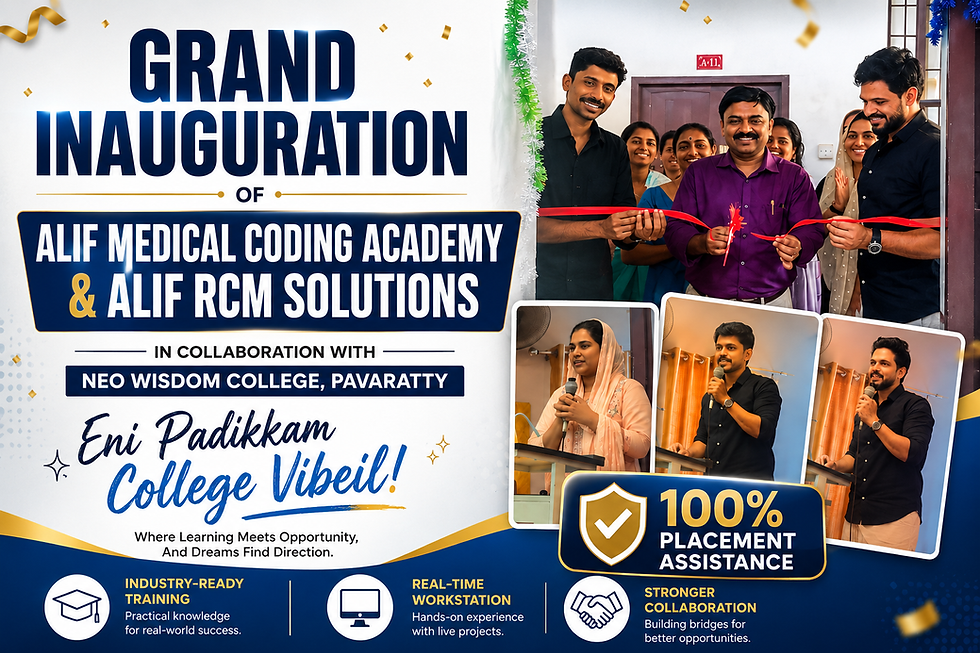
Alif Academy also offers 100% placement assistance, connecting students with employers in the healthcare industry. This support helps students transition smoothly from learning to earning.
Why CPC Certification India Matters for Your Career
Obtaining CPC certification in India opens doors to a growing healthcare industry that values accurate coding for insurance claims and patient records. Certified coders are in demand in hospitals, clinics, insurance companies, and medical billing firms.
By choosing the best medical coding institute in Kerala like Alif Academy, you get training aligned with industry standards and exam requirements. This increases your chances of passing the CPC exam and starting a stable career.
Tips on How to Pass CPC Exam
Understand the exam format: Familiarize yourself with the types of questions and the open-book nature of the test.
Use coding manuals effectively: Practice finding codes quickly in the CPT, ICD-10-CM, and HCPCS manuals.
Focus on problem-solving: Learn to analyze medical scenarios and apply the correct codes rather than memorizing.
Take mock tests: Simulate exam conditions to build confidence and improve time management.
Seek mentorship: Don’t hesitate to ask instructors for help when concepts seem difficult.
Final Thoughts
Medical coding is a skill that anyone with analytical thinking and dedication can learn. You don’t need a medical degree or a science background to pass the CPC exam or build a successful career. The key lies in understanding the coding system, practicing regularly, and using the right resources.

Comments